

Niger’s capital, Niamey, has found itself increasingly impacted by the escalating insecurity outside its limits this year. In January, the city experienced its first-ever terrorist attack, when Islamic State struck Air Base 101 next to the international airport and destroyed several military aircraft. Just under six months later, JNIM staged an assault on the same target, albeit far less successfully. It appeared that one of the two militant groups had struck again in the very early hours of 29 August, when gunfire and explosions were first heard in the capital. The violent clashes that rocked Niamey throughout much of the day, however, were the result of actions by members of Niger’s own armed forces.
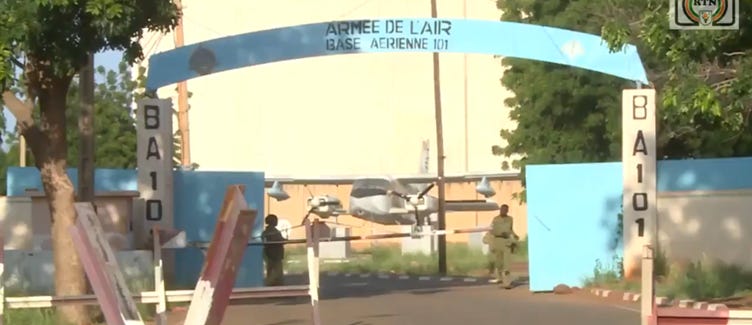
Units from Tillaberi region, which surrounds Niamey, and Dosso region, which sits to the south, set off for the capital on the night of 28 August. Shortly after midnight, around a hundred attackers attempted to gain access to the Presidential Palace by surrounding it. They encountered stiff resistance. After more than an hour of heavy fighting at the site, the attacking troops withdrew and linked up with another unit. From there, they moved on to Air Base 101, where they remained after capturing two barracks and taking soldiers hostage.
At some point in the early hours of 29 August, an attempt was also made to capture the premises of the state broadcaster, RTN. As with the attack on the Presidential Palace, the soldiers were unable to take control, though interruptions to live transmissions suggest that fighting there may also have been intense. Minister of Defence, General Salifou Modi, announced after broadcasting had been restored that the chaos in the capital was the result of “a discontented outburst” among members of the armed forces.
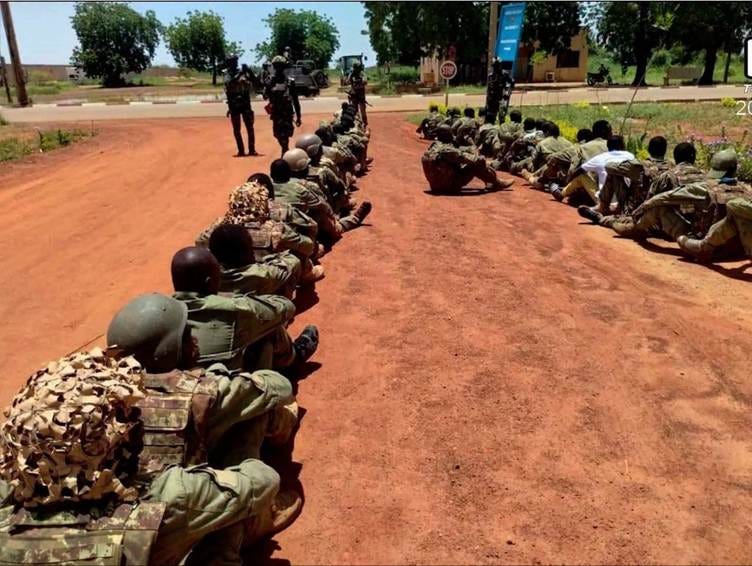
An uneasy calm settled over Niamey as fighting began to ease as the day wore on, but it was clear the government had yet to regain control. A decision was reportedly made in the afternoon to request the assistance of Russia’s Africa Corps. Deploying drones and armoured vehicles to overwhelm the opposition units, the Africa Corps helped loyalist forces retake Air Base 101 in a relatively swift operation. State media announced the victory later in the evening and reported that around a hundred soldiers had been detained at the site following the operation.
The government remained largely quiet in the days that followed. Authorities avoided the term “coup” when discussing the events of 28-29 August, instead referring to it as an act of mutiny. However, by attempting to take control of the Presidential Palace, the state media station, and the capital’s most strategic military base, the perpetrators appear to have strongly signalled their intentions. In a televised address on 1 September, a military official accused many of the usual suspects of complicity in the putsch, namely France, Benin, Cote d’Ivoire, and figures linked to the former president. Chad, not typically one of the government’s public enemies, was also deemed heavily complicit.
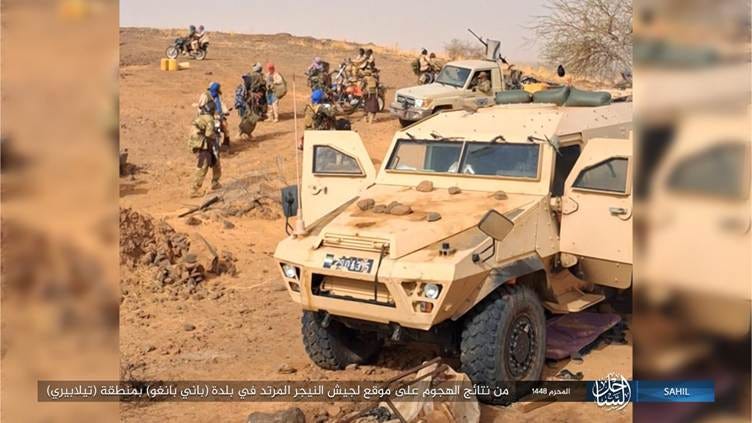
The near-immediate cries of external interference will have come as a surprise to few; any official introspection would have exposed the government’s own failures. Very little is known about those who participated in the coup attempt, even less so about those who orchestrated it. It is all but confirmed that the plot was led by young officers from units deployed on the frontlines in Tillaberi and Dosso, where troops have witnessed Niger’s spiralling insecurity first-hand. The two regions rest firmly in the crosshairs of JNIM and ISSP, which have enjoyed greater operational freedom since President Tiani took power in 2023; both also experienced mass-casualty attacks on security forces not long before the coup attempt.
Alongside concerns over the increasingly difficult fight against militant groups, rank-and-file soldiers reportedly hold deep-rooted grievances over pay, conditions, and capabilities. Another source of discontent is President Tiani’s perceived favouritism of the Presidential Guard - a unit he led prior to his own coup – which is well-equipped but remains largely away from frontline combat. These tensions are unlikely to exist only in isolated pockets of the armed forces.
Unconfirmed reports suggest that several units outside the capital have been demobilised and detained in recent days, in what is likely to mark the beginning of a concerted effort to remove further internal threats to the government, real or otherwise. A purge will need to be undertaken with extreme caution, to avoid both deepening divisions that could result in further challenges to President Tiani’s rule and creating security gaps that could be exploited by militant groups.
Although President Tiani has not been seen publicly since, he appears to have emerged from the first direct challenge to his rule unscathed. But a difficult road lies ahead. The Nigerien leader can take solace from the fact that no close allies have been implicated in the plot (so far), and from the absence of support from other units or the civilian population once it began to unfold. The robust opposition provided by loyalist forces, particularly the Presidential Guard and the Africa Corps, may also alleviate some of Tiani’s anxieties.
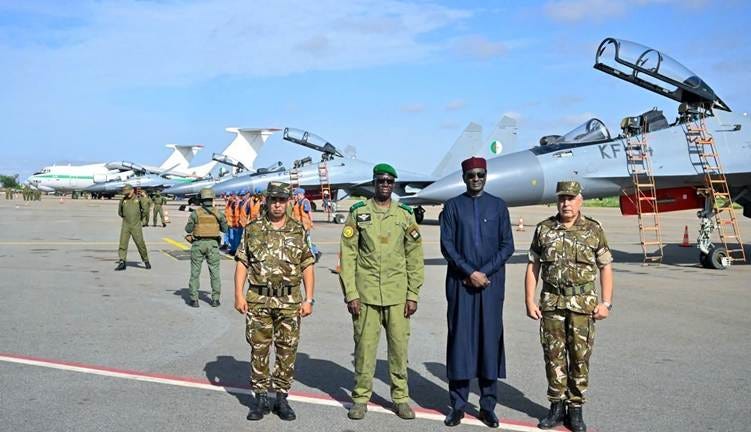
Moreover, the day after the coup attempt, Algeria deployed six military aircraft, including four warplanes, in an unprecedented show of support for a foreign government. Relations between Algiers and Niamey have rebounded markedly this year, following a period of frosty ties caused by Algeria’s downing of a Malian military drone in 2025. Motivated by a desire to regain influence in the central Sahel, the Algerian government has made considerable efforts to repair its relationship with Niger through investment and security agreements. While the scope and duration of Algeria’s military deployment have not been disclosed, it nonetheless highlights a determination to protect its ally that runs deeper than many had previously assessed.
It remains to be seen if such backing, coupled with assistance from the Africa Corps and Turkey, as well as the continued loyalty of key internal stakeholders, is enough to ensure the longevity of President Tiani. Resolving the grievances of rank-and-file soldiers and countering growing militant threats will not be found quickly, if at all, and these challenges will continue to reinforce each other in the meantime. Niger’s downward trajectory this year offers little room for optimism, and President Tiani’s removal may appear to be a potential solution, yet another military coup carries as many risks as it does unknowns – both for the country and the wider region. However, a continuation of the current status quo, propped up by external support, could also lead to disastrous outcomes.
I appreciate this refinement, and I strongly agree with the direction you take it.
What you describe as “learning faster from the interaction” is very close to the central lesson I have drawn from years of field experience. For me, this did not begin as a theoretical model. It developed from operating in environments where every decision produced a reaction, every reaction changed the conditions, and yesterday’s successful assumption could become tomorrow’s vulnerability.
This is also why your distinction between power projection and the power to endure is important. The first strike may demonstrate capability, but it does not necessarily demonstrate strategic freedom of action. Once the opponent reacts and adapts, the environment itself begins to change.
In the field, I learned that the most valuable information often comes after the first action: What did the opponent change? Which assumption has become invalid? What has become more difficult? What new vulnerability has appeared? And what new option has been created?
That is why I tend to regard experience as one of the first teachers of strategy, and the field as one of its most demanding laboratories.
Over time, my thinking developed around a continuous sequence:
Field → Observation → Interpretation → Decision → Action → Reaction → Change → Reassessment → Adaptation → Learning.
But learning itself is not the final destination. Experience becomes strategically valuable only when it is converted into analysis, principles, doctrine, improved practice, and eventually better outcomes.
So I also think about the process as:
Experience → Analysis → Principle → Doctrine → Strategy → Practice → Outcome → Feedback.
This is where I see a strong connection with your argument about endurance. Endurance is not valuable simply because a force survives longer. Its real strategic value is what survival preserves: freedom of action, decision space, adaptability, and future options.
That also explains why I distinguish between tactical effect and strategic outcome.
A tactical success can destroy a target, secure a position, or achieve an immediate objective. But if the opponent adapts faster, changes the environment, and gradually reduces our freedom of action, the strategic meaning of that success can change.
Conversely, an action that produces no spectacular tactical result may still have strategic value if it forces the opponent to change posture, redistribute resources, increase costs, alter assumptions, or surrender part of its decision space.
This is why I particularly agree with your conclusion that technological superiority does not automatically translate into strategic freedom of action. Capability matters, but capability operates inside an adaptive environment.
The field does not simply test doctrine. It exposes what doctrine failed to anticipate.
And perhaps the highest form of military learning is therefore not knowing how to repeat what worked yesterday, but understanding why it worked, recognizing what changed afterward, and developing a better response before the next interaction begins.
For me, that is where field experience becomes analysis, analysis becomes principle, principle can become doctrine, and doctrine remains alive only when it continues to receive feedback from the field.
That is also where military power becomes more than the ability to strike or endure. It becomes the ability to learn, adapt, preserve freedom of action, and create new strategic options after the battlefield has changed.