

Malian Government Recaptures Kidal
25 April was a watershed moment for Mali. JNIM and the Azawad Liberation Front (FLA) joined forces to launch the country’s largest militant offensive since 2012. In the capital, Bamako, JNIM attempted to decapitate the Malian government by targeting its highest-ranking officials. The al-Qaeda branch was partially successful. It killed Mali’s defence minister, severely wounded the intelligence chief, and forced President Assimi Goita into hiding for several days. The 25 April attacks disrupted the Malian military’s command and control and, combined with strikes on key air bases, prevented it from deploying reinforcements in time to stop the coalition’s advance on Kidal.
Kidal - along with Tessalit, one of the country’s northernmost settlements - was officially captured by JNIM and the FLA in the days following, after government forces negotiated a withdrawal with the help of Algerian mediation.
Framed as essential to restoring national sovereignty, retaking Kidal and the wider north was a central objective for Mali’s junta after it took power in 2020 – one it achieved with much fanfare in late 2023. The loss of Kidal in April therefore was a significant blow to the government’s legitimacy, particularly as it appeared to remain on the back foot in the immediate aftermath of the offensive.
JNIM and the FLA launched a second wave of coordinated attacks on 4 July, in hopes of securing their territorial gains in the north by capturing Anefis, a town strategically positioned at the region’s gateway. After a multi-day battle, JNIM and the FLA were forced to retreat in the face of overwhelming firepower. This outcome came as a much-needed victory for the Malian government - one it began preparing to build on in the following months.
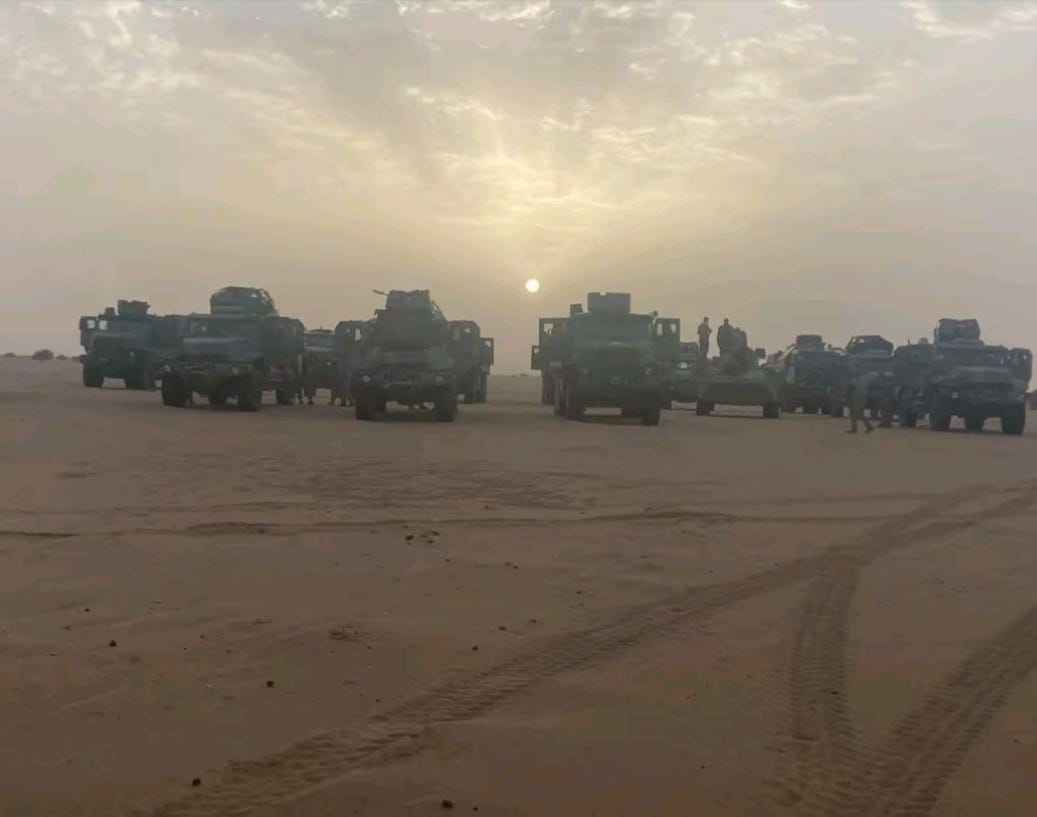
It became increasingly clear that preparations were nearing completion towards the end of September. And when the military launched an intense bombardment across northern Mali on 4 and 5 October, the operation appeared imminent. A military convoy departed for Kidal on the morning of 6 October and reached the urban area by the afternoon.
It did so entirely uncontested, despite travelling through highly exposed terrain. The large-scale battle for Kidal that some had anticipated also failed to materialise, with the FLA announcing it had tactically withdrawn before government forces arrived. JNIM did not officially acknowledge the developments.
The government’s recapture of Kidal reverses the largest gain made by the militant coalition this year, though the uncontested manner in which it unfolded raises questions over the broader trajectory of Mali’s conflict. The FLA and JNIM’s decision to avoid an open battle indicates preparations for other, more important large-scale actions in the near future. There has been speculation that Bamako ultimately intends to push its forces up to the Algerian border to capture Tinzaouaten. This key border town stands as a vital sanctuary for both groups, and defending it is almost certainly non-negotiable.
JNIM’s total silence and lack of activity, however, indicate it has additional plans in motion. It will be all too aware that a heavy focus on the north makes government forces elsewhere more vulnerable, providing space to threaten key urban areas and economic assets in the centre and south. While many unknowns remain despite the government’s victory, the recapture of Kidal is unlikely to be the last major event of the year.
Tensions Between Ethiopia and Eritrea Escalate
The momentum the Tigray People’s Liberation Front (TPLF) achieved after launching an offensive with other anti-government groups at the end of last month has rapidly dissipated and group’s territorial gains have been largely reversed by federal government forces. In recent days, the Ethiopian National Defence Force (ENDF) has pushed deeper into Tigray, allowing it to capture the regional capital, Mekelle, on 4 October. Mekelle was taken largely without a fight, with the TPLF retreating as federal troops and allied forces edged closer to the city.
The TPLF framed the move as a strategic choice, with its leader Debretsion Gebremichael warning “We will attack the enemy where we choose, not where he chooses for us.” However, the ENDF has continued to move further north towards the Eritrean border, narrowing the space from which the TPLF can choose to fight. This advance has made it increasingly likely that Eritrea – a key backer of the TPLF, whose forces are suspected of already participating in the latest stage of the conflict – will become decisively involved.
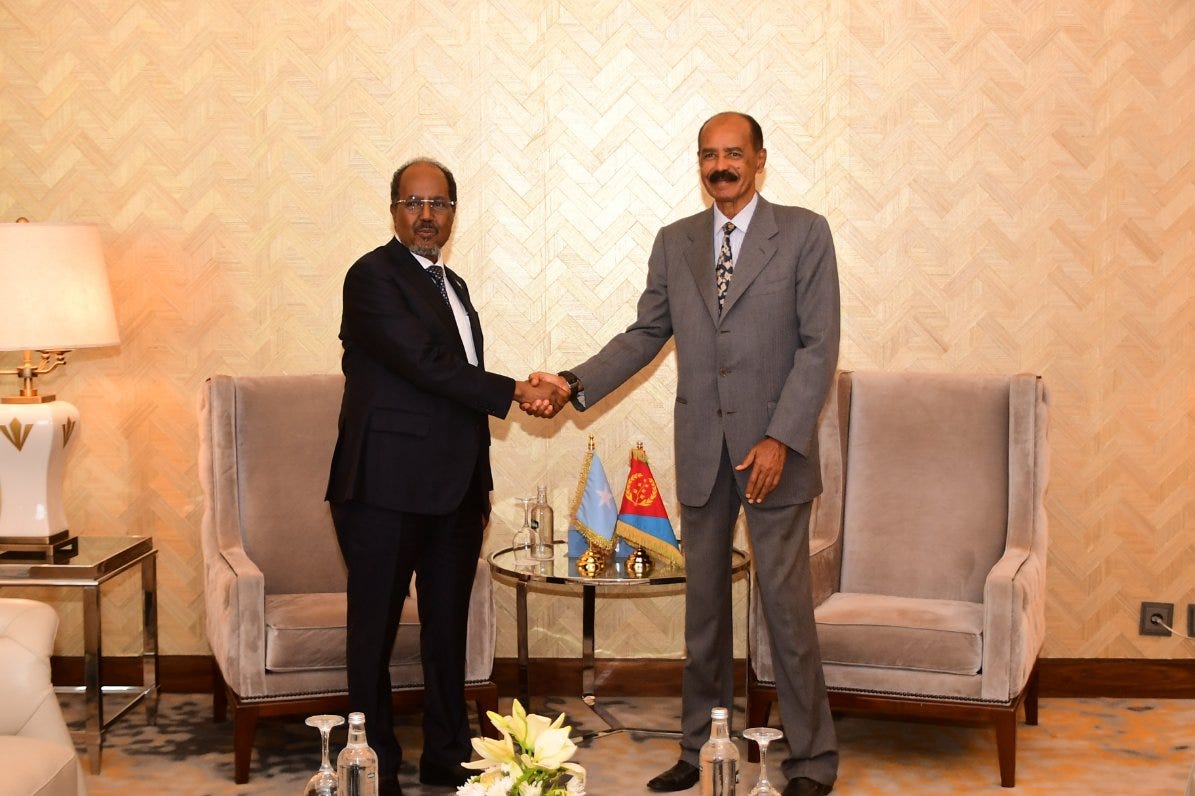
On 1 October, diplomatic relations between the neighbours were severed, with each government accusing each other of long-standing destabilisation efforts. Further inflaming the already acute tensions, on 5 October Ethiopia’s Prime Minister Abiy Ahmed reiterated that he will restore his country’s access to the Red Sea. A little over a day later, the Eritrean government hit back, arguing that Addis Ababa is seeking to invade the country, but that Eritreans “will not surrender their land.” Hostilities between the two countries appear to be nearing a critical juncture – the coming weeks may finally see years of mounting tensions result in all-out war.
US Official Meets Sudan’s Military Leader
Sudan’s military government recently found itself at odds with the Trump administration last month, after Washington refused to grant its leader, Abdel Fattah al-Burhan, a visa to attend the United Nations General Assembly. The move was said to be an attempt to pressure Burhan’s government into accepting a temporary ceasefire deal first proposed in June. It was met with considerable condemnation from SAF figures and supporters – particularly given that a US official had also stated that the Sudanese Armed Forces (SAF) represented legitimate authorities.
Burhan met with Massad Boulos, President Donald Trump’s senior adviser for Arab and African affairs and the main architect of the ceasefire push, over the weekend in Egypt. Details of their discussions remain undisclosed, though Boulos later remarked that the US “stands ready to support all efforts leading to a comprehensive dialogue among the Sudanese political forces, leading to a preliminary road map of the future of the Sudan.”
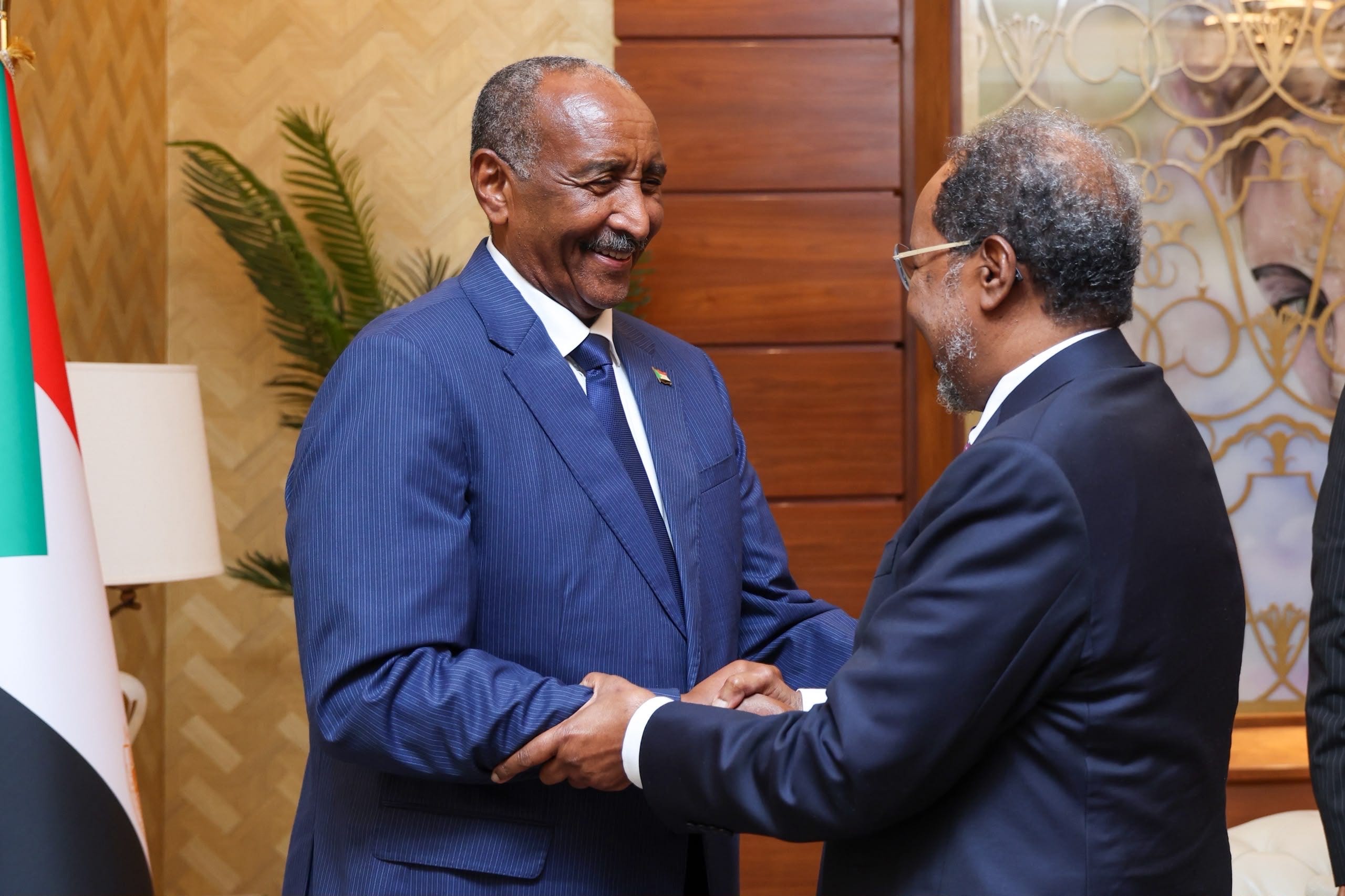
The recent meeting may serve to alleviate some of the friction between the two governments, but it is unlikely to alter the stance of Sudanese military authorities. Burhan’s administration reportedly viewed the ceasefire deal proposed by the US as counterproductive due to the SAF’s recent frontline gains. Officials also warned that the terms of the truce could lead to a Libya-style partition of the country and claimed that their proposed alterations – which included a monitored RSF withdrawal from urban areas – had been ignored.
Beyond these concerns, it is likely that the military government is also reluctant to agree to a temporary truce because of Washington’s longer-term ambitions. The US reportedly views a 90-day ceasefire as a stepping stone towards negotiations over a permanent cessation of hostilities and the eventual return of a civilian government.
Burhan has dismissed the prospect of running for office post-war and stated he is seeking a transition, yet he has faced accusations that he is deliberately prolonging the conflict to maintain power. Key figures in the military have also publicly argued that he should remain in power for a period after the war ends to ensure stability, suggesting that long-term military rule is by no means a distant prospect.
ISWAP Commander Killed in Nigeria
Nigerian authorities announced the killing of a senior ISWAP commander in the southern state of Ondo on 5 October. Abdussamad Ohida was reportedly killed alongside several other militants over the weekend during an operation against their hideout in Owo forest. Ohida had assumed responsibility for coordinating ISWAP operations in parts of southern and north-central Nigeria after his predecessor, Abu Ikrimah, was detained in 2023. Intelligence gathered from Ikrimah and obtained from the United Kingdom is said to have played a key role in the recent operation.
Local media outlets reported that Ohida and his men were preparing to stage major attacks against civilians during the festive period and disrupt the general elections in early 2027. His death marks another setback for ISWAP, whose fortunes have diminished in recent months. This decline broadly began when one of the group’s highest-ranking leaders, Abu Bilal al-Mainuki, was killed alongside several other key figures in an operation conducted by Nigerian and US forces in May. The loss has since coincided with less frequent and less intense activity from the group, a trend driven in part by the cohesion issues that followed.
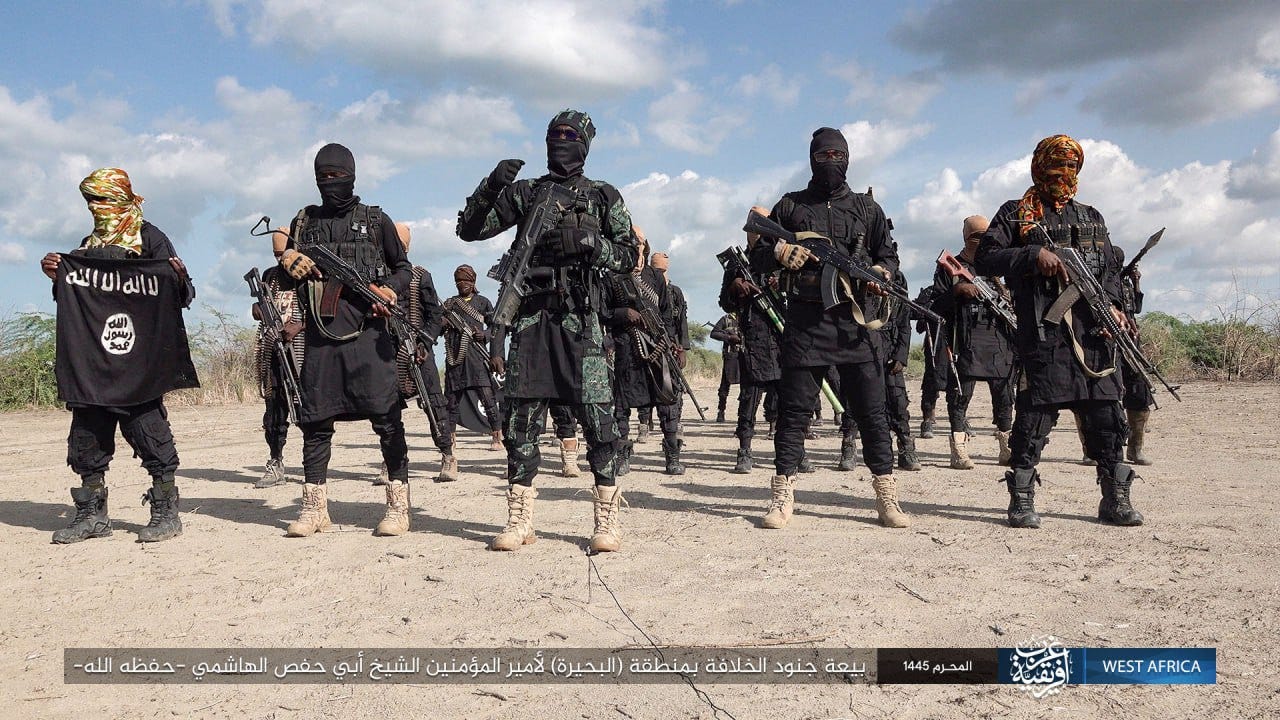
HumAngle reported that the latest in a series of internecine clashes took place on 25 September. The fighting was caused by attempts to release militants detained on the orders of al-Mainuki’s successor, Ba Shuwa. It was instigated by a faction led by commander Yaku Buduma, who had close ties with al-Mainuki but has recently split from ISWAP along with his unit of around a thousand men based in the Lake Chad area. The fracture is likely to weaken ISWAP’s ability to confront Nigerian security forces and tackle its rival JAS (also referred to as Boko Haram).
The group is likely to remain a key concern as Nigeria’s elections draw closer. Even if it does not, the array of other armed actors perpetrating violence across the country will ensure that security stays at the forefront of voters’ minds. President Tinubu’s economic record, characterised by major reforms that have complicated the lives of many Nigerians, is also a key challenge in his push for re-election. Observers have noted that the strength of his party’s organisational structure and lack of a unified opposition may nonetheless allow him to remain in power.
Senegal’s President Under Pressure
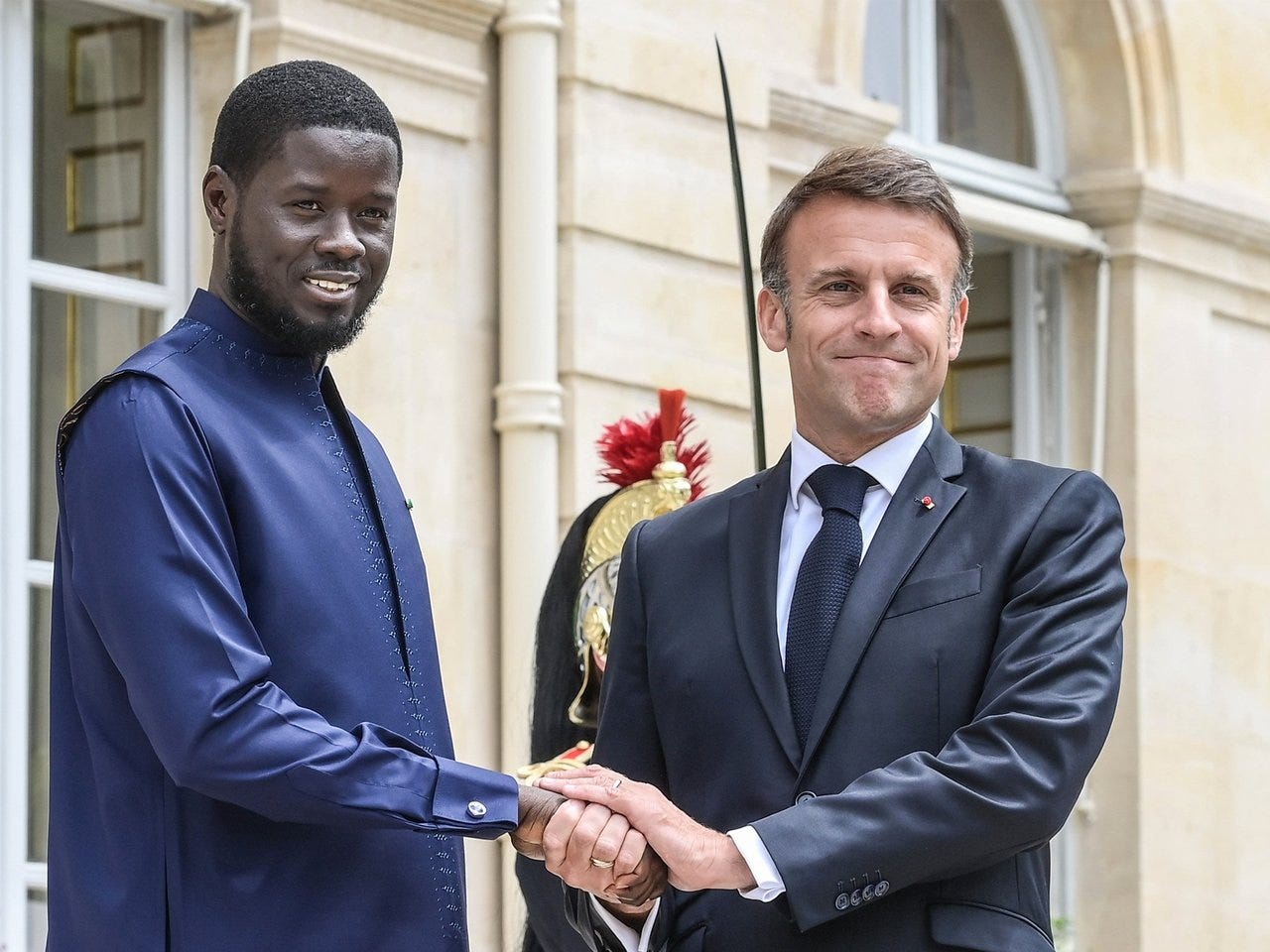
A French warship arrived at the Port of Dakar in Senegal for a five-day visit on 2 October. During an official ceremony ahead of planned training exercises, representatives from both countries reiterated their commitment to a renewed strategic partnership “based on mutual trust and respect for sovereignty.” The mission occurred a little over a year after the permanent presence of French forces in Senegal was brought to an end; President Bassirou Diomaye Faye ordered their withdrawal after taking office in 2024.
The visit also comes ahead of President Emmanuel Macron’s first trip to the country in several years, scheduled for late October. Macron’s arrival is expected to draw strong condemnation from Ousmane Sonko, Speaker of the National Assembly and a key player in the decision to order the withdrawal of the French military. Sonko served as Faye’s prime minister from 2024 until rising tensions between the two came to a head in May, when Faye fired him and dissolved the government. Faye, a long-time Sonko ally, ran in his place in 2024. Sonko, whose prosecutions under former President Macky Sall sparked major protests between 2021 and 2023, was unable to stand due to a criminal conviction.
Tensions between the two stemmed from several key issues, chief among them power-sharing and how to respond to the billions of dollars of hidden debt discovered after they took office. Sonko strongly opposed debt restructuring with the IMF, which he argued was unnecessary and undermined the country’s economic sovereignty. Three months after he was removed from government, Senegal announced it had agreed a deal in principle with the monetary body, marking a decisive step in the protracted crisis that has characterised Faye’s tenure.
The $2.2 billion IMF programme awaits final approval, which hinges in part on the government’s ability to secure funding from external partners. While the agreement is likely to pass, it alone will not solve Senegal’s mounting economic pressures. There has been growing discontent over the prices of food, electricity, fuel, and water, which led to rare protest over the cost-of-living in the capital last month. With Ousmane Sonko eyeing his presidency, Faye faces the challenge of addressing these grievances while managing the country’s strained fiscal position.